

Research
Research overview
CEPRU conducts epidemiological research on the identification of causes of cancer and its progression to inform cancer prevention through studies that characterise risk at the individual and population level, understand the natural history of cancer, and identify biological targets of prevention.
CEPRU leverages a wide range of expertise and partnerships across The Institute of Cancer Research and Imperial College. It uses novel methods in epidemiological studies such as data-driven approaches like multi-omics to measure biomarkers in blood or tissues (e.g., genomics, transcriptomics, proteomics, metabolomics) or medical imaging AI/ML analyses (e.g. radiological and pathology digital images) to conduct world-class epidemiological research in cancer. The goal is to provide evidence that informs public health recommendations, clinical guidelines and regulations to reduce the burden of cancer.
Expertise
CEPRU brings together a multidisciplinary team with strengths across epidemiology, public health, and data science to advance cancer prevention and early detection. Our expertise spans exposure assessment, including environmental, hormonal, lifestyle, and biological factors; biomarker discovery using genomics, metabolomics and proteomics; AI analysis of digital pathology and radiological images, and geospatial analyses of socio-economic and environmental determinants; and clinical research. We apply rigorous methods in bias assessment and causal inference, supported by advanced biostatistics and data science to uncover actionable insights for population health.
Research areas

Aetiologic Factor Identification
-
We study how genetic, environmental, lifestyle, and biological exposures—both internal and external—contribute to cancer development. This work supports evidence-based policy, such as carcinogen classification and exposure regulation.

Risk Asssessment
-
We conduct studies to characterise and predict cancer risk including evaluating the impact of exposure dose and duration, reducing or stopping exposure and how factors such as windows of susceptibility modify risk. This work informs public health strategies, screening recommendations, shapes safety standards, and supports prevention planning.
Understanding Natural History
-
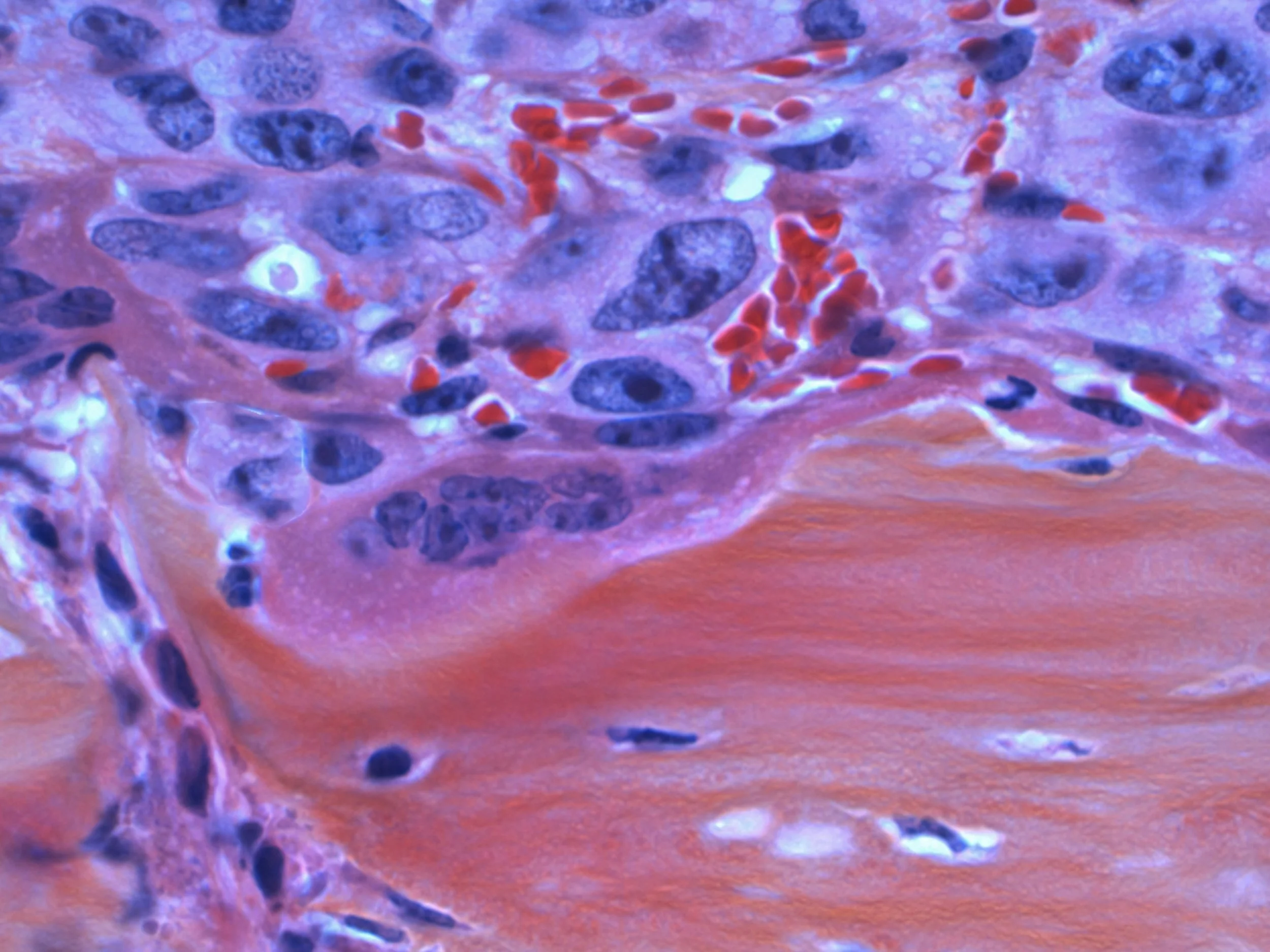
We investigate how cancer develops over time, from normal tissues to early precursors and invasive disease. These insights help refine early detection methods and improve prevention strategies.

Evaluation of
Biological Targets
-
We explore the molecular and cellular pathways involved in cancer to identify potential targets for prevention, risk reduction therapies, and precision interventions.
Major collaborative research projects
CEPRU investigators lead research resources across collaborating institutions, including large prospective cohorts such as the European Prospective Investigation into Cancer and Nutrition (EPIC), the Breast Cancer Now Generations Study, and national datasets such as those curated by the Small Area Health Statistics Unity (SASHU) at Imperial College.
CEPRU leverages strategic partnerships between the ICR and The Royal Marsden NHS Foundation Trust, and between Imperial College, the Imperial College NHS Trust and the North West London Primary Care Networks to advance clinical and translational research.
CEPRU-affiliated researchers are co-leading national and international collaborations in integrative epidemiology and risk prediction to inform prevention and early detection, including:
-
This project uses population-wide datasets, including Small Area Health Statistics Unit (SAHSU), to understand the drivers of changing cancer trends in early and later onset cancers, focusing on breast and colorectal cancer. Using geospatial analyses, we evaluate whether patterns are explained by changes in risk factors and/or changes in screening and diagnostic practices. We also evaluate how these drivers vary across population subgroups and geographical areas to inform prevention and early detection strategies
CEPRU Collaborators: Amy Berrington, Bethan Davies, Montserrat Garcia-Closas, Marc Gunter, David Muller, Esme O’Brien, Zoey Richards
-
This project leverages the longitudinal data within the Generations Study to investigate how changes in modifiable risk factors impacts cancer risk.
CEPRU Collaborators: Amy Berrington, Montse Garcia-Closas, Marc Gunter, Alicia Heath, Isobel Jackson, David Muller
-
This project integrates AI analysis of serial mammograms with rich longitudinal data from participants in the Generations Study to evaluate AI-derived mammographic biomarkers. The aim is to advance understanding of breast cancer aetiology and to improve risk prediction and risk-stratified prevention and early detection.
CEPRU Collaborators: Daniel Adams, Amy Berrington, Montserrat Garcia-Closas, Ben Glocker
-
The aims of this project are to evaluate the impact of pre and post-diagnosis lifestyle on cancer outcomes including recurrence and survival using data from the Generations Study and other prospective cohort studies.
CEPRU Collaborators: Amy Berrington, Martina Brayley, Kostas Steiros
-
This project using geospatial linkages in the Generations Study to evaluate relationships between air pollution and breast cancer risk.
CEPRU collaborators: Amy Berrington, Marc Chadeau, Daniela Fecht, Montserrat Garcia-Closas, Michael Jones, Zoey Richards, Shuang Wang
-
Co-Lead: Marc Gunter
CEPRU Collaborators: Amy Berrington, Montserrat Garcia-Closas
-
The CRUK CD3 program aims to advance our ability to prevent, detect and diagnose cancers early by better understanding who is most at risk of developing cancer.
CEPRU Collaborators: Amy Berrington, Marta Blangiardo, Bethan Davies, Montserrat Garcia-Closas, Marc Gunter
-
Breast Cancer Risk Prediction Project is a large-scale collaborative research resource with data from over 1.5 million women participating in prospective cohort studies to both develop comprehensive breast cancer risk prediction models and validate newly developed models in integrated health care systems.
This project includes data from 15 prospective cohorts, including the Generations Study and EPIC.
Co-lead: Montserrat Garcia-Closas
CEPRU collaborators: Amy Berrington, Reuben Frost, Marc Gunter
-
The Confluence Project is a large research data resource of breast cancer cases and controls for multi-ancestry genome wide association studies (GWAS) to discover variants for breast cancer risk, develop multi-ancestry polygenic risk scores, and to discover variants for breast cancer survival.
This project includes data from the Generations Study, EPIC, and EDSMAR.
Co-Lead: Montserrat Garcia-Closas
CEPRU Collaborators: Amy Berrington, Marc Gunter, Clare Turnball
-
More information on this HPRU project can be found on the project website.
Theme Lead: Amy Berrington
CEPRU Collaborators: Marta Blangiardo, Bethan Davis, Paul Elliot, Aislinn Macklin-Doherty
-
Discovering the Causes of Three Poorly Understood Cancers in Europe (DISCERN) is a five-year project of the European Commission Cancer Mission to understand the causes of renal, pancreatic, and colorectal cancer in Europe and to help explain the geographical distribution of these cancer types, including their high incidence in central and eastern Europe.
Co-Lead: Marc Gunter
CEPRU Collaborators: Marc Chadeau, Montse Garcia-Closas, David Muller, Laia Peruchet-Noray, Elio Riboli
-
PROSPECT is a large international Cancer Grand Challenges team funded in 2024 to investigate the global rise in early-onset colorectal (bowel) cancer, particularly in adults under 50. We are contributing with EPIC and the Generations Study.
CEPRU Collaborators: Amy Berrington, Montserrat Garcia-Closas, Marc Gunter, Nathalie Kliemann
-
PROMINENT is a Cancer Grand Challenge project exploring what makes a cell ‘normal’, and the impact of cancer “promoters” on tumorigenesis. We are specifically leading human intervention studies where we modify or remove exposure to a cancer risk factor (obesity, smoking) and investigate the impact on the biological architecture of normal tissues to help us understand how these factors cause cancer.
Co-Lead: Marc Gunter
CEPRU Collaborators: Rawan Maawadh, David Muller, Laia Peruchet-Noray, George Richenberg